
From Tu Youyou to a Validated Target in a Single Working Session
By SpineDAO · May 2026
The Idea That Changes Everything
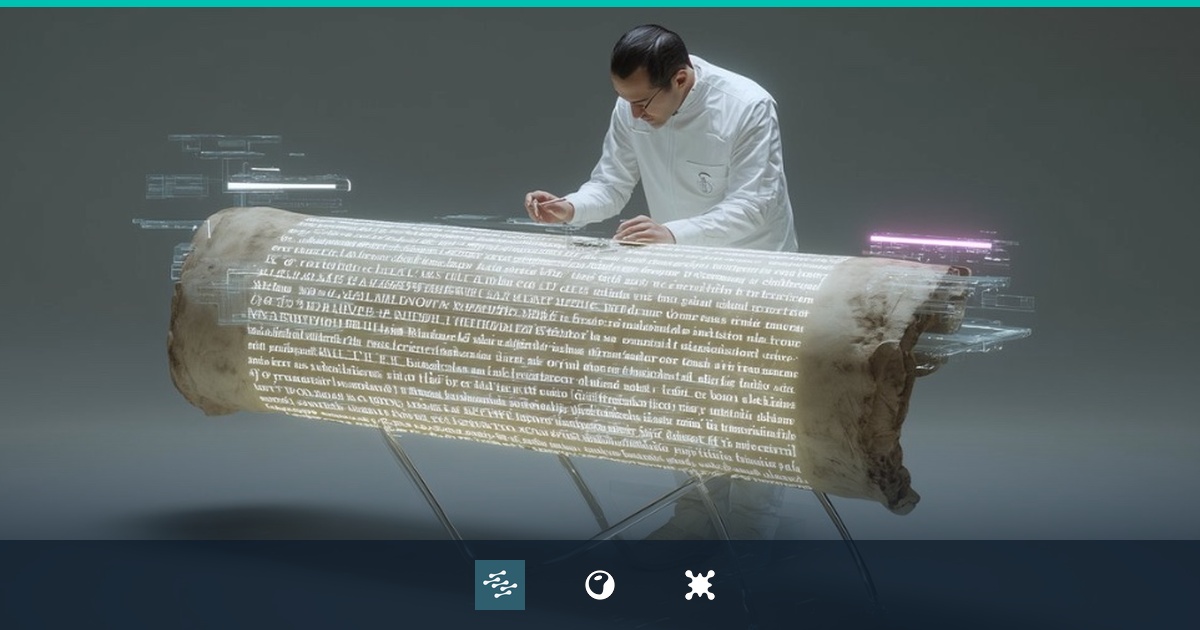
In 1972, a Chinese pharmacologist named Tu Youyou pulled a 1,600-year-old text off a library shelf. In it she found a description of sweet wormwood, used for "intermittent fevers," that modern pharmacology had stopped reading. She isolated artemisinin. Hundreds of millions of people are alive because of it, and in 2015 she won the Nobel Prize in Physiology or Medicine.
The lesson isn't about wormwood. It's about method: some of the most valuable discoveries in medicine may already exist, written down in texts the field forgot how to read.
SpineDAO built that method into an open pipeline for spine medicine.
Layer 1 — Spine Quest: Sourcing the Medical Past
The discovery starts with the search. The best historical insights aren't digitized — they sit in university libraries, monastery archives, medical-school collections, and family papers, often in languages most biomedical researchers don't read. Before any of them can be analyzed, someone has to find them.
Spine Quest is SpineDAO's open call to do exactly that: visit a library, find a pre-20th-century manuscript or rare text that discusses spine conditions, back pain, or musculoskeletal medicine, photograph the cover and key pages (with the holding institution's permission), and submit through spinal.science.
Contributions are reviewed by the SpineDAO scientific committee and, if validated, passed to the next layer. This is decentralized science at its best: a global community — clinicians, historians, librarians, patients, researchers — that collectively holds more historical intelligence than any single institution. Spine Quest is how the pipeline scales the one input no algorithm can generate: forgotten human observation.
Layer 2 — Chronos: Turning Old Texts into Testable Hypotheses
Chronos is SpineDAO's historical hypothesis engine. It takes the sources Spine Quest brings in and uses large language models and decentralized knowledge graphs to turn their observations into machine-readable, refutable hypotheses, structured with the Hypothesis and Evidence (HypE) taxonomy and mapped to modern medical concepts.
Concretely: it preserves and OCRs each source, extracts observations about spine conditions and pain mechanisms, formalizes each one into a testable hypothesis with an evidence structure and a novelty verdict, and surfaces the research opportunities that sit in the gap between old observation and modern evidence.
The Chronos paper (Dehouche, Chatelain, Lafage, Meyblum, Pourcher, Challier — 2025) already demonstrates this on two seed sources: the 1824 treatise of Charles-Prosper Ollivier d'Angers, a largely forgotten French spinal-cord anatomist, and a 19th-century Thai traditional-medicine compendium. The hypotheses it generated — from reversible spinal venous congestion to a gut–spine axis — are each scored for scientific merit and novelty. Spine Quest is what feeds it at scale from here.
Chronos is available to verified researchers on spinal.science, the SpineDAO clinical network.
Layer 3 — BIOS: Running the Discovery Pipeline
A hypothesis is not a drug. Between "this mechanism may drive radicular pain" and "here is the target worth pursuing" lies a research program.
This month, SpineDAO ran its first AI-assisted target-validation work with BIOS, Bio Protocol's AI Scientist. The indication: lumbar radiculopathy (sciatica). It's a hard, honest target.
Gabapentin and pregabalin show a clear lack of effectiveness for sciatica specifically across eight randomized controlled trials and a systematic meta-analysis, and the newest non-opioid mechanism — the NaV1.8 blocker suzetrigine, FDA-approved for acute pain in 2025 — did not separate from placebo in its Phase 2 radiculopathy study. (None of that is medical advice; it's a statement about trial evidence in one indication.)
The reason is mechanistic. Sciatica isn't pure neuropathic pain — it's three things at once: an inflammatory component at the compressed nerve root, a neuropathic component from dorsal-root-ganglion injury, and a central-sensitization component that also helps explain why placebo responses in these trials run so high. A drug that hits only one of the three arms tends to leave the others intact. That's the gap.
We ran two full stages with BIOS — target selection and human-omics validation — producing a kill-criteria-annotated, evidence-ranked target dossier. Here is what it found:
🥇 Track 1 — Multi-target anti-inflammatory lead
Human evidence: High — inflammatory cascade anchored in human disc tissue, serum, CSF, DRG
Verdict: Primary program — advance immediately
(Lead compound withheld — IP pending)
🥈 Track 2 — α2δ-1 protein–protein-interaction disruptor (peptide)
Human evidence: Moderate — human DRG α2δ-1 and dorsal-horn signals
Verdict: Strategic option — de-risk sprint via PeptAI
🥉 Track 3 — Metabolic / dicarbonyl-stress rescue axis
Human evidence: Low — thin LSR-specific evidence
Verdict: Moonshot — omics-gated, no wet lab yet
The human-omics validation confirmed that the primary inflammatory program in LSR involves a persistent TNF/IL1B/IL6/NF-κB/chemokine module alongside nociceptor-sensitizing signals including NGF, TRPV1, TRPA1, and CGRP — and that this state often persists in chronic disease rather than fully resolving. That makes the multi-target anti-inflammatory lead the best disease-matched hypothesis.
For the peptide track, BIOS ranked the candidate α2δ-1 interfaces by structural accessibility and radiculopathy relevance and identified a lead interface for peptide design. As with Track 1, we're holding the specific interface and its rationale back while IP is assessed.
Layer 4 — PeptAI: Designing the Molecule
For the peptide track, BIOS identifies and characterizes the target interface but does not design the molecule — that needs a dedicated engine. That engine is PeptAI, which generates constrained peptide candidates and runs them through a multi-gate computational validation stack before any wet-lab handoff.
The division of labor is clean: BIOS finds and characterizes the target; PeptAI designs the binder; SpineDAO's wet-lab partners run the assays that decide whether it works.
The Full Vertical
This isn't four separate tools — it's one pipeline:
Spine Quest (sourcing) → Chronos (hypothesis) → BIOS (validated, evidence-ranked target) → PeptAI / cheminformatics (candidate molecule) → wet lab → translation.
Every layer is open and documented. The hypotheses are published, the methodology is shared, the data stays in SpineDAO's decentralized infrastructure — and the one thing we hold back, deliberately, is the pre-patent chemistry.
Why This Matters Beyond the Spine
Sciatica isn't the only disease where an old text might hold a clue. Chronic pain, inflammatory disease, degeneration — musculoskeletal medicine has centuries of careful clinical observation, from Hippocratic descriptions of ischias to 19th-century anatomy to Soviet rehabilitation medicine, that modern pharmacology has never systematically mined.
Spine Quest makes it a collective effort, Chronos makes it systematic, BIOS makes it executable, and PeptAI makes it molecular.
Tu Youyou spent years in libraries. We're building the engine that compresses the search — and crediting the community that feeds it.
Get Involved
About SpineDAO
SpineDAO is a clinician-governed AI infrastructure project for spine surgery, built on Solana and powered by $SPINE. Three live platforms: SpineBase (tokenized clinical registry), Spinal (verified clinician network and AI research tools), and the SpineDAO Intelligence Gateway. Two medRxiv preprints. One BioHackathon recognition.
Publications and Links
· Chronos:https://doi.org/10.21203/rs.3.rs-6677562/v1
· Validated Synthetic DataGeneration: https://doi.org/10.64898/2026.04.07.26350316
· Spine Reviews: https://doi.org/10.64898/2026.04.11.26350678
· BIOS: https://chat.bio.xyz
· spinebase.app | spinal.science | spinedao.com
SpineDAO — Building Intelligence Around Spine Care






%20Medium.png)


.png)
